



When buying a flat in London, purchasers naturally focus on the asking price, location, layout and lease length. However, the annual service charge can have a significant effect on both the ongoing affordability of the property and its future resale appeal.
Service charges have also been rising. Hamptons reported that the average annual charge for a London flat reached £2,801 in 2025, representing an increase of 6.4% over the previous year. However, averages only tell us so much. A service charge that looks expensive for a simple period conversion may be entirely understandable in a professionally managed building with lifts, landscaped gardens, a concierge and substantial reserve funds.
Conversely, a very low service charge is not automatically good news. It can indicate that a building is being managed economically and efficiently—but it may also mean that essential maintenance is being deferred, leaving leaseholders exposed to substantial future bills.
The key question is therefore not simply:
“Is the service charge high?”
It is:
“Is the service charge reasonable for this particular building, and is the money being managed properly?”
What does a service charge normally cover?
The exact position is governed by the lease, which should set out what the freeholder or management company is permitted to recover from leaseholders.
Depending on the building, the service charge may include:
- Buildings insurance
- Cleaning and lighting of communal areas
- Lift maintenance
- Gardening and landscaping
- Concierge or porter services
- Communal heating and hot water
- Fire-safety systems
- Repairs and general maintenance
- Managing-agent and professional fees
- Contributions towards a reserve or sinking fund
- Larger projects such as roof, window or façade repairs
A buyer should never assess the total figure without first understanding what is included.
For example, a charge covering heating, hot water, buildings insurance and a full-time porter cannot sensibly be compared directly with the charge for a converted Victorian house where the residents are responsible for most costs individually.
What is a reasonable service charge for a London flat?
There is no universal figure that represents a “reasonable” London service charge.
The appropriate level will depend on:
- The size and age of the building
- The number of flats sharing the costs
- The size of the individual apartment
- The services and amenities provided
- Whether lifts, heating or hot water are communal
- The condition of the structure and communal areas
- Staffing levels
- Insurance costs
- The amount being collected for future major works
Rather than relying only on an annual total for London flat service charges, I generally recommend considering the cost in the context of the apartment’s size, value and building type.
A relatively high service charge may still represent good value where the building is extremely well maintained and provides services that a buyer genuinely wants. Equally, buyers should be cautious about paying for extensive facilities—such as swimming pools, gyms, private cinemas and 24-hour concierge teams—that they are unlikely to use.
The new-build and luxury-development market provides a good illustration. Savills has previously shown how pools and other extensive amenities can materially increase the service charge, particularly where the cost is being divided between a relatively small number of apartments.
Compare like with like
When assessing a service charge, the most useful comparison is with similar flats in genuinely comparable buildings.
Period conversions
A flat within a converted Victorian or Edwardian house may have relatively limited communal expenditure. There may be no lift, concierge, landscaped grounds or significant shared amenities.
However, these buildings can sometimes operate without a meaningful reserve fund. When the roof, exterior brickwork or communal windows need replacing, leaseholders may be asked to fund the work through a large one-off payment.
Traditional mansion blocks
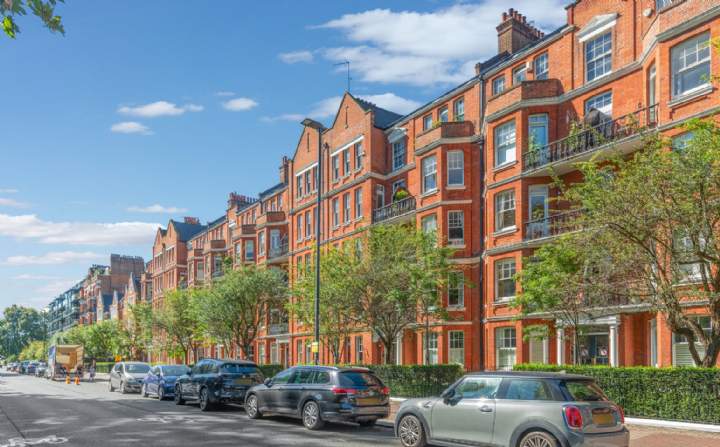
Purpose-built mansion blocks may include lifts, porters, communal heating, gardens and more extensive common areas.
Their annual service charges will often be higher than those of a basic conversion, but established mansion blocks can also benefit from experienced management, clearer maintenance programmes and properly funded reserves.
Modern developments
Contemporary apartment buildings frequently provide lifts, secure underground parking, gyms, concierge services, communal gardens and enhanced fire-safety and security systems.
These services come at a price. Buyers should consider whether the quality of management and amenities justifies the cost, and whether the charge is likely to remain affordable as staffing, energy and maintenance costs increase.
Ex-local-authority flats
The routine annual service charge for an ex-local-authority flat can sometimes appear competitive. However, buyers need to pay particular attention to planned major works.
Projects involving roofs, windows, concrete repairs, lifts or external refurbishment can result in significant additional bills, particularly where the cost is divided among leaseholders within a large block or estate.
Look beyond the current year
One of the most common mistakes is to look only at the latest annual service-charge demand.
Before buying, I would normally want to see:
- The current service-charge budget
- The final accounts for at least the previous three years
- Any balancing charges or credits
- The current reserve-fund balance
- Details of historic expenditure
- Information about anticipated major works
- Copies of any Section 20 notices
- Recent residents’ or management-company meeting minutes
- The building’s planned-maintenance programme
- Details of any disputes involving leaseholders, the freeholder or managing agent
The relationship between the estimated budget and the final accounts is particularly important.
If a building repeatedly records large deficits, leaseholders may regularly receive additional demands after the end of the accounting year. Consistent and unexplained increases can also indicate weak budgeting or poor cost control.

Is there a healthy reserve fund?
A reserve or sinking fund holds money collected from leaseholders for future major expenditure. Contributions form part of the service charge and, where permitted by the lease, can help spread the cost of expensive projects over several years.
A strong reserve fund is generally reassuring, particularly in an older or more complex building. It can reduce the likelihood of every leaseholder suddenly being asked to contribute a substantial lump sum when major works become necessary.
However, the existence of a reserve fund is not enough on its own. Buyers should establish:
- How much money is currently held
- Whether the money is held in trust
- What projects the fund is intended to cover
- Whether projected expenditure exceeds the available balance
- Whether contributions have been sufficient historically
A building requiring extensive roof or façade works may technically have a reserve fund, but that is of limited comfort if the fund contains only a small proportion of the likely cost.
Equally, a building without a reserve fund is not necessarily badly run. Some leases do not permit one. The buyer must simply understand that large works may need to be funded through separate demands.
Major works and Section 20 notices
Major works represent one of the largest financial risks when buying a leasehold flat.
These can include:
- Roof replacement
- Lift renewal
- External redecoration
- Window replacement
- Brickwork or concrete repairs
- Fire-safety upgrades
- Communal heating-system replacement
- Extensive internal refurbishment
Where proposed qualifying works will cost an individual leaseholder more than £250, the landlord will generally be required to follow the statutory Section 20 consultation process. Consultation rules also apply to certain long-term agreements costing an individual leaseholder more than £100 per year.
A Section 20 notice does not necessarily mean that the works are unnecessary or that the flat should be avoided. Well-planned investment can improve a building and protect its long-term value.
The important questions are:
- What work is proposed?
- Why is it required?
- What is the likely cost attributable to the flat?
- How reliable is the estimate?
- Is there enough money in the reserve fund?
- When will payment be required?
- Has the seller already paid or agreed to contribute?
- Could the cost be reflected in the purchase price?
Buyers should also remember that an initial estimate is not always the final bill. The actual amount may rise or fall once the work has been tendered or completed.
Warning signs buyers should investigate
A high service charge is not automatically a reason to withdraw. However, the following points deserve careful investigation:
Large unexplained increases
Costs naturally rise, but substantial annual increases should be supported by a clear explanation.
Repeated budget deficits
A managing agent that consistently underestimates costs may create regular and unwelcome balancing charges.
No reserve fund in an ageing building
This can leave leaseholders exposed when major structural or mechanical work becomes necessary.
A significant major-works programme
The purchase may still make sense, but the likely contribution should be quantified and reflected in the negotiation.
Poorly maintained communal areas despite high charges
An expensive service charge should normally be visible in the quality of the building’s management and maintenance.
High arrears across the building
If several leaseholders are not paying, cash flow can become strained and planned work may be delayed.
Ongoing disputes
Disagreements involving the freeholder, managing agent or residents can make a flat harder to sell and the building more difficult to manage.
Complicated mixed-use arrangements
Where a building includes shops, restaurants or offices, it is important to understand how costs are divided between the commercial and residential occupiers.
Expensive amenities with limited buyer demand
A high service charge can negatively affect marketability when future buyers do not consider the building’s facilities worthwhile.
What information are leaseholders entitled to receive?
Leaseholders paying variable service charges have statutory rights to request information showing how their charges have been calculated and spent. They can ask for a summary of relevant costs and, following receipt of the summary, inspect supporting accounts, receipts and other documents.
Service charges may also be challenged where, among other reasons:
- The lease does not permit the charge
- The cost is considered unreasonable
- The work was unnecessary
- The service or work was not completed to a reasonable standard
- The landlord failed to follow the required consultation process
Disputes can potentially be considered by the First-tier Tribunal in England. Buyers and leaseholders should obtain specialist legal advice before taking formal action.
RICS has also published an updated Service Charge Residential Management Code intended to encourage greater transparency, consistency, reasonableness and properly planned long-term maintenance.
Can a high service charge affect the flat’s value?
Yes. Buyers do not assess a property’s purchase price in isolation. They also consider mortgage payments, service charges, ground rent, council tax and future maintenance liabilities.
A high charge may reduce the pool of potential buyers, particularly where it appears disproportionate to the services provided. This can place downward pressure on value or make the flat slower to sell.
That does not mean every high-service-charge property represents a poor purchase. Some buyers will happily pay for outstanding security, professional management, immaculate communal areas and excellent facilities.
The issue is whether the market is likely to continue valuing those benefits sufficiently to support the cost.
This is particularly important when comparing two flats with similar asking prices. The apartment with the lower purchase price may not be the better-value option if it carries substantially higher annual charges and greater major-works exposure.
Questions to ask before making an offer
Before committing to a London flat, buyers should try to establish:
- What is included within the current service charge?
- How has the charge changed during the past three years?
- Have there been regular balancing charges?
- How much is held in the reserve fund?
- What major works have recently been completed?
- What work is expected during the next five years?
- Have any Section 20 notices been issued?
- Are there disputes or significant service-charge arrears?
- Is the building professionally and effectively managed?
- How does the charge compare with similar local buildings?
- Will the annual cost affect mortgage affordability or resale demand?
- Does the asking price properly reflect the building’s liabilities?
Some of the detailed documentation may not become available until the conveyancing process is underway. However, a good selling agent should be able to provide basic information early enough to identify obvious concerns before a buyer incurs substantial legal and survey costs.
The Ridgestone Property view
At Ridgestone Property, we do not assess a flat solely on its appearance or asking price.
We consider the complete ownership proposition, including the lease, service charge, management quality, reserve fund, likely major works, local comparables and future resale market.
Where the service charge or anticipated works create additional risk, this does not always mean walking away. It may mean investigating further, restructuring the offer or negotiating a price that accurately reflects the liabilities.
A well-managed building with a sensible service charge and a properly funded maintenance programme can provide far greater security than a superficially inexpensive block where essential expenditure has simply been postponed.
The objective is not to find the London flat with the lowest service charge.
It is to identify a property where the annual cost is transparent, proportionate and supported by good management—and where the purchase price represents genuine value once all future obligations have been considered.
Considering buying a flat in London?
Ridgestone Property acts exclusively for buyers, providing whole-of-market property search, detailed due diligence, pricing advice and expert negotiation throughout the acquisition process.
This article provides general information and is not a substitute for advice from a qualified solicitor, surveyor, accountant or leasehold specialist.

Leave a Reply