



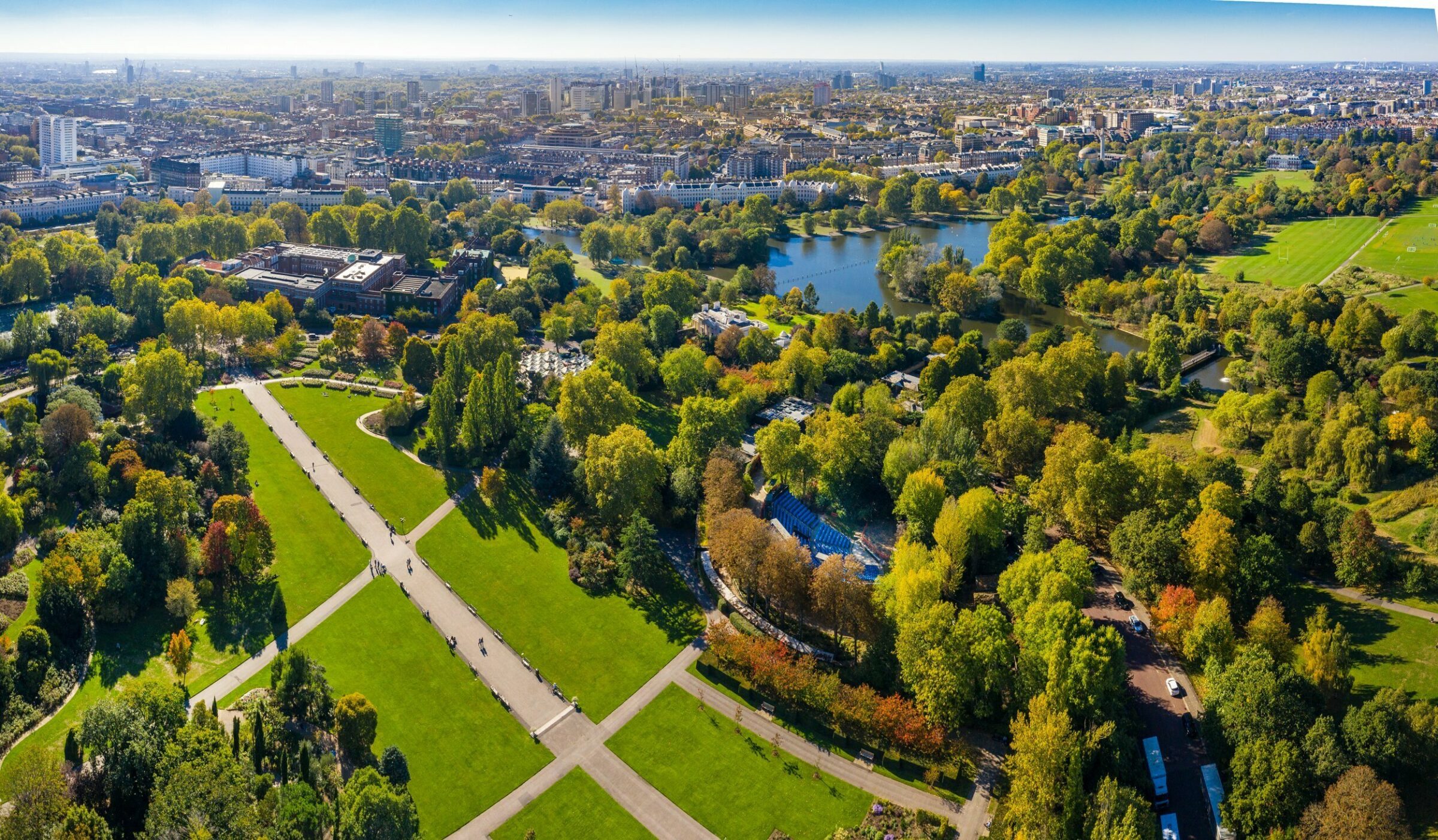
For many buyers and tenants, living near a park is no longer a secondary preference. Access to green space now sits alongside transport, schools, natural light and outside space as one of the most important parts of a London property search.
This is particularly true for families, dog owners, runners, cyclists and people who work from home. A park can become an extension of the property: somewhere to exercise before work, walk the dog, take children at weekends or simply escape the pace and density of the city.
London is unusually well placed to offer this. From the formal landscapes of the Royal Parks to commons, heaths, wetlands, woods, canals and riverside paths, the capital has a far wider variety of green space than many people expect.
However, choosing where to live is not simply a matter of identifying the largest park. The character of the surrounding neighbourhood, the type of housing, the nearest entrance, transport connections and the way the space is used all matter. A flat overlooking Hyde Park offers a very different lifestyle from a family house beside Richmond Park or a Victorian terrace close to Victoria Park.
How green is London?
London is sometimes described as the greenest city in the world. That is difficult to prove conclusively because international cities use different boundaries and definitions of green space. It is more accurate to say that London is one of the world’s greenest major cities — and the evidence is still striking.
City Hall estimates that London has around 3,000 parks, with approximately 20% of the capital consisting of publicly accessible green space. The latest Greater London Authority mapping estimates that 51.7% of London has green cover when private gardens, trees, verges and other vegetation are included. London also became the world’s first National Park City in 2019.
This green infrastructure is not only attractive. It supports exercise and mental wellbeing, provides shade during hot weather, helps with drainage and flood resilience, creates habitats for wildlife and can make dense neighbourhoods feel far more liveable.
Does living near a park increase property value?
In general, yes — although there is no single ‘park premium’ that applies across London.
An Office for National Statistics analysis published in 2019 found that urban homes within 100 metres of publicly accessible green space were, on average, 1.1% more expensive than comparable homes more than 500 metres away. A view over green space or water produced an additional average premium of 1.8%.
Those figures were based on transactions across England and Wales between 2009 and 2016, so they should not be used as a current London valuation tool. They do, however, support what we consistently see in practice: buyers place a real value on usable green space, and an attractive open view can be even more valuable than proximity alone.
In prime London, the difference can be far more pronounced because genuine park-facing homes are scarce. A high-floor apartment with a protected view across Hyde Park, for example, belongs to a different market from an otherwise similar property several streets away.
But proximity is not automatically positive. A busy road may sit between the property and the park. Some parks host major events, create weekend footfall or close at dusk. A ground-floor flat immediately beside a park may raise different privacy or security considerations. The premium therefore depends on the quality of the view, orientation, noise, entrance location, property type and the day-to-day usability of the space.
The best places to live near London’s parks and green spaces
There is no single best option. The right choice depends on budget, commute, property type and whether the priority is a formal park view, woodland walks, family facilities, riverside access or a stronger sense of village life.
1. Hyde Park and Kensington Gardens: Knightsbridge, Bayswater, Lancaster Gate and Mayfair
For buyers seeking prime central London living with immediate access to major green space, Hyde Park and Kensington Gardens are the obvious starting point. Together they create a vast open landscape through the centre of west London, with the Serpentine, sports facilities, playgrounds, formal gardens and long walking and running routes.
The surrounding neighbourhoods offer very different property markets. Knightsbridge and Mayfair provide super-prime apartments, mansion blocks and highly serviced developments. Lancaster Gate and Bayswater offer stucco-fronted terraces, period conversions and an increasing number of high-quality new developments. Kensington, to the west, combines apartments with substantial family houses and access to excellent schools.
This is one of London’s strongest options for international buyers and tenants who want both centrality and greenery. The trade-off is price. Direct park views are among the capital’s most sought-after and tightly held property features, while homes only a street or two back can still command a premium for easy gate access.
2. Green Park and St James’s Park: Mayfair, St James’s and Belgravia
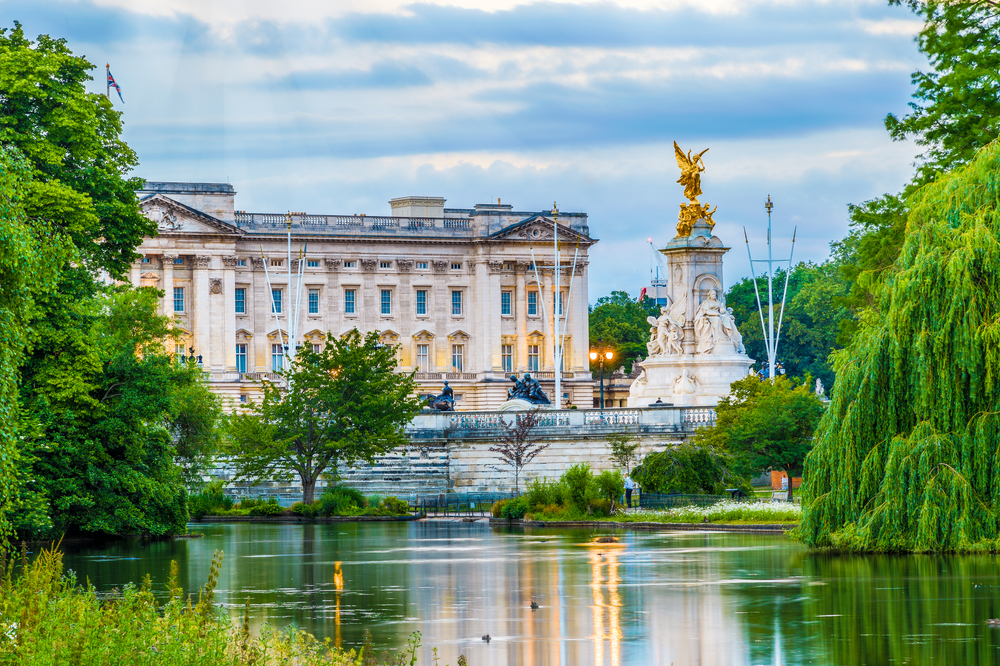
Green Park and St James’s Park provide a different version of central London park living. They are smaller and more formal than Hyde Park, but their location beside Buckingham Palace, Mayfair, St James’s and Westminster is exceptional.
Residential stock directly facing Green Park is limited because many neighbouring buildings are hotels, clubs and offices. Buyers are more likely to find homes within a short walk in Mayfair, St James’s or northern Belgravia. This works particularly well for people who want a highly central base with access to greenery but do not need the park to function as their main weekend recreation space.
For dog owners or families wanting longer daily walks, Hyde Park may be more practical. For a pied-à-terre or an exceptionally central apartment, however, access to Green Park and St James’s Park adds a rare sense of openness.
3. The Regent’s Park and Primrose Hill: Marylebone, St John’s Wood and Primrose Hill
The Regent’s Park is one of the best-balanced choices for buyers who want green space without leaving central London. It offers formal gardens, large sports pitches, playgrounds, boating, London Zoo and wide open lawns, while Primrose Hill provides one of the city’s most recognisable skyline views.
Marylebone works well for buyers seeking elegant mansion-block or apartment living close to the West End. St John’s Wood has a quieter, more residential character, with substantial apartments and detached or semi-detached family houses. Primrose Hill offers colourful terraces, a strong café culture and a more informal village feel.
Homes directly adjoining the park — particularly the grand terraces and villas around the Outer Circle — occupy a very rarefied market. Better value can sometimes be found by concentrating on the correct gate and walking route rather than insisting on a direct view.

4. Hampstead Heath: Hampstead, Highgate, Belsize Park and Dartmouth Park
Hampstead Heath feels less like a manicured city park and more like a piece of countryside placed inside north London. Its woods, ponds, meadows, swimming facilities and elevated views make it one of London’s most distinctive green spaces.
Hampstead Village offers historic houses, cottages and period apartments, but at premium prices. Highgate is similarly attractive for families wanting larger houses, excellent schools and a village atmosphere. Belsize Park generally provides easier access to more apartment stock and the Jubilee line, while Dartmouth Park can offer a slightly quieter alternative near the eastern side of the Heath.
The topography matters. A home may look very close to the Heath on a map but involve a steep walk or an inconvenient route to the nearest entrance. Buyers should also decide which part of the Heath they will actually use: Parliament Hill, the ponds, Kenwood or the more wooded northern sections each create a different search area.
5. Richmond Park: Richmond, East Sheen, Petersham and Kingston
Richmond Park is the largest of London’s Royal Parks, covering approximately 2,500 acres. With ancient trees, open grassland, woodland, herds of deer and extensive walking and cycling routes, it offers a scale of nature that is difficult to match anywhere else in the capital.
Richmond provides the strongest combination of town centre, riverside, restaurants and rail connections. East Sheen is particularly popular with families looking for houses, schools and access through the northern park gates. Petersham feels more rural and secluded, while the Kingston side can provide easier access to a larger town centre and different housing budgets.
This is an excellent option for active families, cyclists and dog owners, although owners must understand the rules and responsibilities associated with walking dogs around deer. Gate location is also crucial: living ‘near Richmond Park’ can still mean a surprisingly long walk to an entrance.
6. Barnes: commons, wetlands and riverside green space
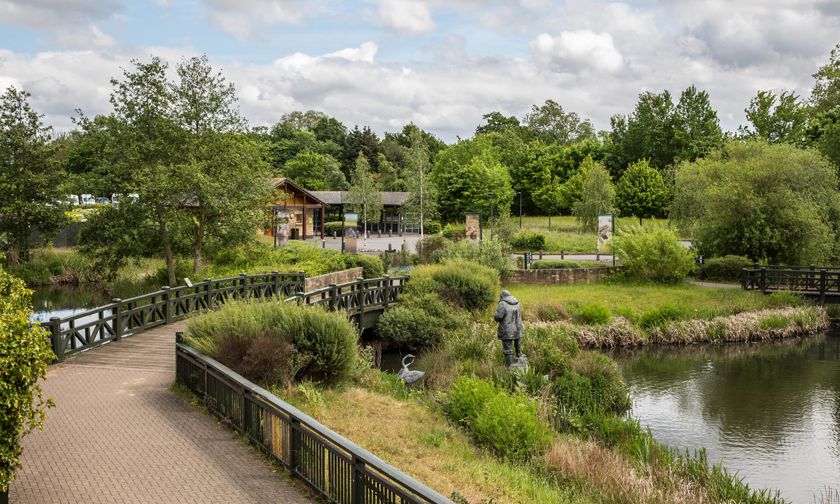
Barnes is not defined by one major park. Its appeal comes from the combination of Barnes Common, the Thames towpath, the village pond, playing fields and the 105-acre London Wetland Centre.
This creates one of the strongest green-and-blue living environments in London. The area is especially attractive to families and dog owners who want a genuine village atmosphere, attractive period houses and regular access to nature while remaining within southwest London.
The property market varies between substantial houses near the river, Victorian and Edwardian homes around the village, and apartments closer to the stations and Castelnau. Buyers should pay careful attention to the practical commute, because different parts of Barnes have very different access to Barnes, Barnes Bridge, Putney and Hammersmith transport connections.
7. Wimbledon and Putney Commons: Wimbledon Village, Putney Heath and Southfields
Wimbledon Common and Putney Heath provide extensive woodland, open heath, ponds and walking routes. They feel far wilder than many central London parks and are particularly well suited to dog walking, running, cycling and horse riding.
Wimbledon Village is the premium option, with large period houses, cottages, restaurants and immediate access to the Common. Putney Heath can provide better value and a more direct route towards central Putney. Southfields offers family houses, a strong community and Underground access, although the walk to the main Common is longer from many streets.
For families who want both schools and green space, this part of southwest London remains difficult to beat. The key trade-off is that the most desirable houses close to Wimbledon Village can carry a substantial premium over superficially similar homes farther down the hill.
8. Battersea Park, Wandsworth Common and Clapham Common
South London offers several excellent choices for buyers who want a traditional neighbourhood combined with a major local park.
Battersea Park provides landscaped gardens, riverside walks, sports facilities and children’s attractions. The streets between the park and Albert Bridge are particularly attractive, while the surrounding market includes everything from Victorian houses and mansion blocks to new apartments around Battersea Power Station. Buyers should distinguish between a genuine park-facing position and properties separated from the park by busy roads or larger developments.
Wandsworth Common is more residential and village-like, with sought-after family streets around Bellevue Road, the Toast Rack and the wider Wandsworth and Earlsfield borders. Clapham Common suits buyers who want faster access to central London, lively local amenities and a broad selection of flats and houses around Clapham Old Town, Abbeville Village and the northern edge of the Common.
These areas often provide more house for the money than prime central or northwest London, while still offering excellent schools, transport and daily green-space access.
9. Greenwich Park and Blackheath
Greenwich Park and neighbouring Blackheath create one of southeast London’s most attractive combinations of historic architecture, open space and far-reaching views.
Greenwich offers a strong town centre, the Thames, maritime landmarks and transport towards Canary Wharf and the City. Blackheath has a more spacious village atmosphere, with Georgian and Victorian houses arranged around the open heath. The two areas meet naturally around the southern side of the park.
This can be an excellent alternative for buyers who like Hampstead or Richmond but want to consider southeast London. The market is highly street-specific, and the walk to a station can vary considerably, so the most attractive-looking location on a map is not always the most practical.
10. Victoria Park and the Olympic Park: Victoria Park Village, Bow and Hackney Wick
Victoria Park is one of east London’s most successful and popular green spaces. Opened in 1845 and extending across approximately 86 hectares, it connects with the Regent’s Canal, Mile End Park and the wider green network towards Queen Elizabeth Olympic Park.
Victoria Park Village, on the northern side, is the most established residential option, with Victorian houses, independent shops and a strong community atmosphere. Bow offers a wider range of period homes and apartments, while Hackney Wick and Stratford provide more contemporary living, canal access and new-build stock around the Olympic Park.
This part of London works particularly well for buyers who want green space alongside a more creative, urban neighbourhood. Event schedules, weekend footfall and the exact walking route to transport should form part of the decision.
11. Wanstead Park and Epping Forest: Wanstead and Snaresbrook
For buyers prepared to look further east, Wanstead and Snaresbrook offer access to Wanstead Park, Wanstead Flats and the southern reaches of Epping Forest, together with Central line connections into London.
Wanstead has an attractive high street, period houses and a family-oriented atmosphere. It can provide considerably more space than many inner-London neighbourhoods, while the surrounding woodland and open land create a genuine sense of escape.
The trade-off is distance from central London and a more suburban feel. For buyers whose priorities are a house, garden, schools and regular outdoor access, however, it deserves serious consideration.
Other green London neighbourhoods worth considering
London’s green-space network is too extensive for any shortlist to be exhaustive. Other strong options include:
- Muswell Hill and Alexandra Park, for elevated north London living, family houses and views towards the city.
- Dulwich and Herne Hill, for Dulwich Park, Brockwell Park, playing fields and the woods around Sydenham Hill.
- Holland Park and Notting Hill, combining a smaller but beautiful park with some of west London’s most attractive streets.
- Teddington and Hampton Wick, for Bushy Park, the Thames and a greener outer-southwest London lifestyle.
- Chiswick, for the Thames, Chiswick House and Gardens and easy access to several smaller local parks.
What buyers and tenants should check
A property advertised as being ‘moments from the park’ may not provide the lifestyle a buyer expects. Before committing, I would normally recommend checking the following:
- The walking time to the nearest usable entrance, not simply the distance to the park boundary.
- Whether a major road, railway line, steep hill or housing estate interrupts the route.
- Opening and closing times, lighting and how comfortable the route feels after dark.
- Dog rules, seasonal restrictions and any wildlife considerations, particularly around deer.
- Major event schedules, sports pitches, playgrounds and the likely effect on noise and footfall.
- Whether the view is genuinely protected or could be affected by trees, scaffolding or future development.
- The difference in value between a direct park view, immediate gate access and a general neighbourhood association with the park.
- For leasehold flats, whether pets are permitted under both the tenancy or lease and the building regulations.
- How the location works on a wet winter evening as well as on a sunny weekend morning.
It is also worth visiting at several times of day. A quiet weekday viewing may not reveal weekend events, school traffic, evening activity or the volume of runners and cyclists using a particular entrance.
The Ridgestone Property view
Green space is one of London’s greatest assets, but it needs to be assessed as part of the complete property proposition.
For one client, the right answer may be an apartment with an uninterrupted Hyde Park view. For another, it may be a family house ten minutes from Wimbledon Common, where the larger garden, school run and Underground connection matter more than being directly opposite the park. A dog owner may prioritise practical gate access, while an international buyer may value the combination of a central address and a visible green outlook.
The strongest purchase is rarely the property closest to the largest park at any price. It is the home where the green space genuinely improves daily life and where the premium remains sensible in the context of the view, access, housing quality, transport and future resale demand.
At Ridgestone Property, we advise buyers and tenants across London on neighbourhood selection, property search, value and negotiation. If access to parks, commons, woodland or the river is central to your brief, we can help compare the options objectively and identify the streets and properties that offer the best overall fit.
Considering a London property search?
London Property Search | London Property Rental Search | Contact Ridgestone Property

Leave a Reply